Applying for the PM Youth Chromebook Scheme 2026 is only the first half of the journey. The second half is selection: how students are ranked, how provincial quotas work, and what a merit list actually means in this scheme. This guide explains the selection process in plain words, so that you know exactly how the 500,000 free Chromebooks are distributed and where you stand in it.
The scheme was launched on 23 October 2026 at the Jinnah Convention Centre in Islamabad by Prime Minister Shehbaz Sharif, and it is run by the Inter Boards Coordination Commission (IBCC) under the Prime Minister’s Youth Programme. Registration is free, and only one application is allowed per student. Selection is merit-based, which means your verified SSC-I result decides your place — not payment, not influence, and not speed of application.
How Selection Works
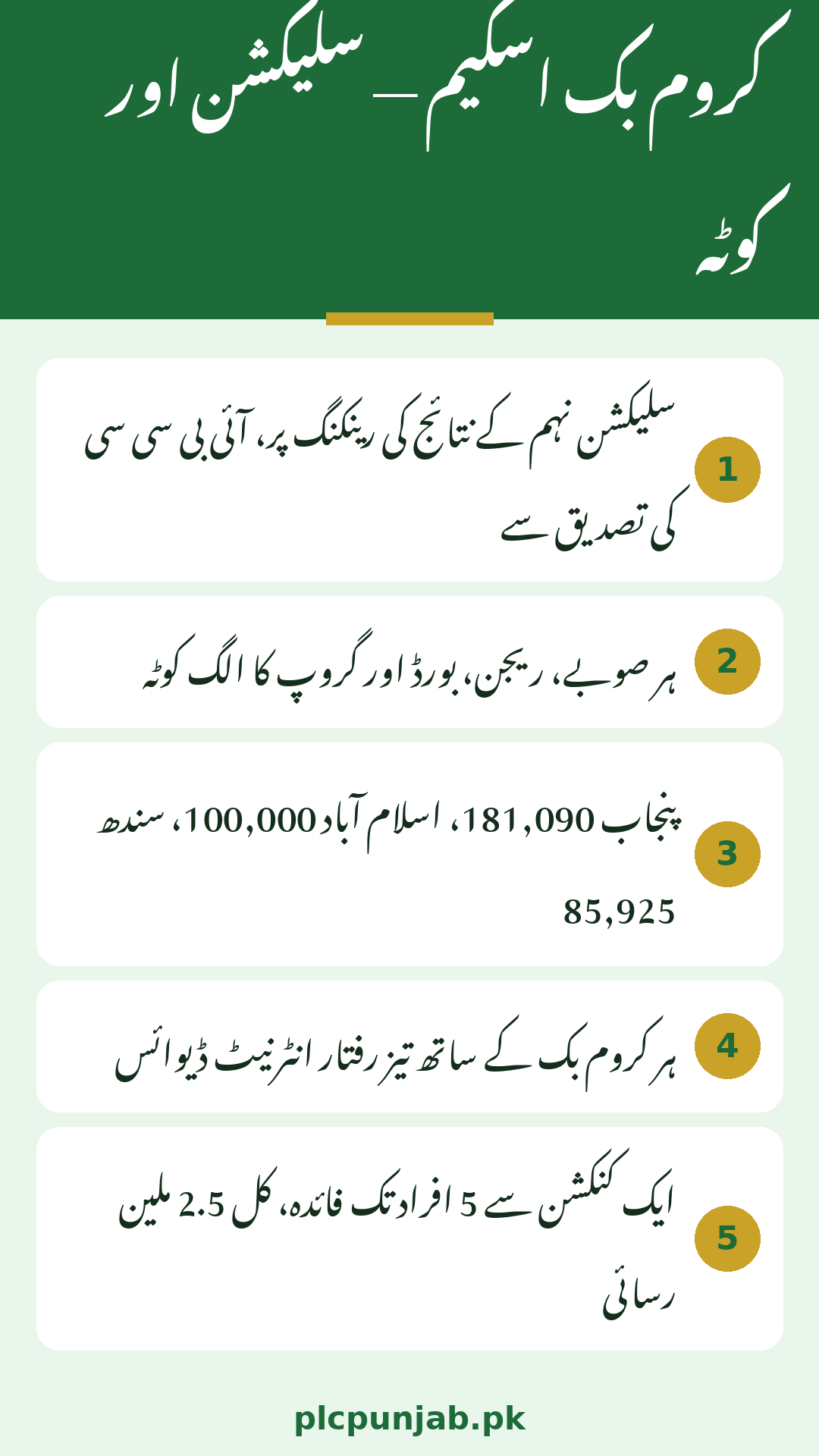
Selection is based on ranking by SSC-I results that IBCC verifies. Once applications close for a region, students are ranked by their verified marks, and devices are offered from the top of the ranking downward until that region’s quota is filled. This is why accurate marks matter so much: the ranking uses the result on your board record, not the marks you typed from memory. A wrong entry can place you in the wrong position, or remove you from the ranking entirely. It also explains why the minimum of 50 percent marks is a gate, not a ranking bonus: students below 50 percent do not enter the ranking at all, while students above it are ordered by their actual marks. Speed of application plays no part in the ranking, so there is no advantage in rushing an entry full of errors over taking the time to submit a correct one.
Ranking is based on verified SSC-I results.
IBCC verifies each student’s result against the board record.
Devices are offered from the top of the ranking downward.
Selection stops when the quota for that unit is filled.
The 500,000 Chromebooks are divided among provinces and regions through fixed quotas, and each quota is filled separately. Punjab receives the largest share at 181,090 devices, followed by Islamabad with 100,000, Sindh with 85,925, Khyber Pakhtunkhwa with 51,170, Balochistan with 31,815, and Azad Jammu and Kashmir and Gilgit-Baltistan with 25,000 each. Because quotas are separate, a student competes within their own province or region, not against students from the whole country.
Province / Region
Chromebooks Allotted
Punjab
181,090
Sindh
85,925
Khyber Pakhtunkhwa
51,170
Balochistan
31,815
Islamabad
100,000
Azad Jammu and Kashmir
25,000
Gilgit-Baltistan
25,000
Total
500,000
Board and Group Rankings
Within each province and region, selection continues per board and group until the quota is met. This matters because students are not ranked in one single national list. Your board and your subject group shape the ranking you are part of, so two students with similar marks can face different cut-offs if they belong to different boards or groups. The practical lesson is simple: compare yourself with students from your own board and group, not with students from elsewhere, because that is the ranking that decides your place. It also means that rumours about a single national cut-off mark should be ignored: there is no single cut-off, because each board and group fills its own share of the quota, and the last selected mark in one board can differ from the last selected mark in another.
Selection Factor
How It Works
Verified SSC-I result
IBCC verifies marks against the board record
Province / region quota
Fixed share per province and region, filled separately
Board and group
Selection continues per board and group until quota met
Minimum marks
50 percent in SSC-I required to enter the ranking
Seminary share
1 of every 5 devices for seminary students
The Internet Device Benefit
Every Chromebook in this scheme includes a high-speed internet device, and that part of the package deserves attention. A device without connectivity is of limited use for online study, so the scheme pairs each Chromebook with internet access. One connection can benefit up to five people, which means the programme extends digital access to around 2.5 million people in total. For a student in a home without broadband, this benefit can matter as much as the Chromebook itself. It means homework research, recorded lessons and online reading are possible without travelling to a library or a paid internet cafe, and it means siblings and parents in the same household can also use the connection for their own learning and work.
Each Chromebook includes a high-speed internet device.
One connection benefits up to five people.
Total digital access reaches around 2.5 million people.
Sindh Registration Timing
Students in Sindh should understand one timing detail that affects their selection window. Registration in Sindh opens after all Sindh boards announce their 2026 9th-grade results. Until those results are announced, Sindh students cannot complete the record-search step, because their verified result does not yet exist in the system. This is a scheduling fact, not a fault, and it does not reduce a Sindh student’s chance: the Sindh quota of 85,925 devices is filled from Sindh applicants once their results are available. The practical advice for Sindh students is therefore to prepare documents early, keep the mark sheet ready, and check the portal after the board announcements rather than worrying about a record that cannot appear before its result exists.
After Selection: What to Do
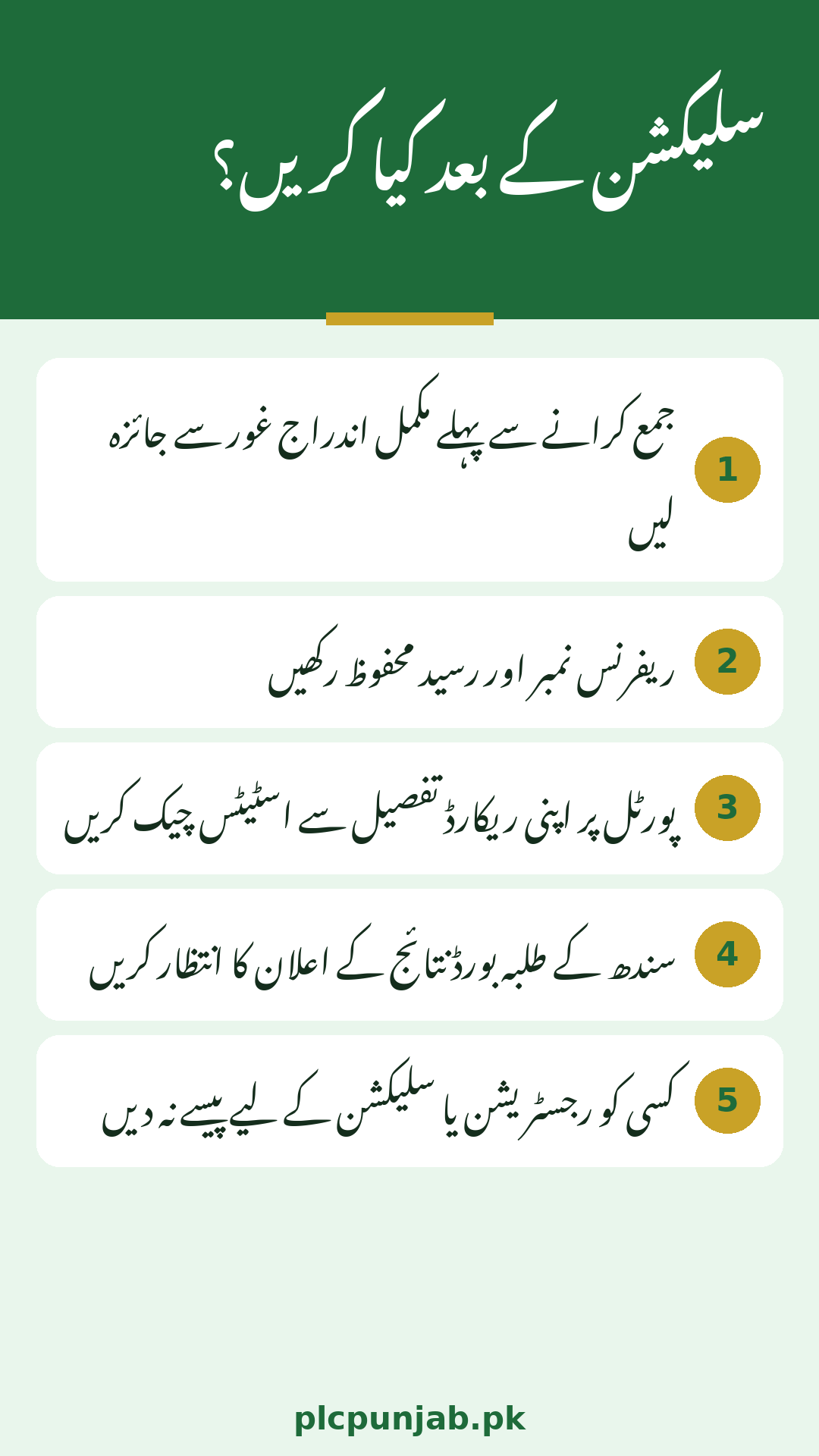
If you are selected, the most important habit is the one you started during registration: keep your records safe. Your reference number and downloaded slip remain your proof of application, and you should keep them until the process is fully complete. Check your status on the official portal using your record details, and follow only instructions that come from the portal or your board. When distribution details are announced, they will come through those same official channels, so there is no need to rely on forwarded messages or unofficial lists. Above all, never pay anyone for selection, distribution or delivery — the scheme is free from registration to the device itself, and anyone asking for payment is not part of it. For the full registration walkthrough, read our PM Youth Chromebook Scheme apply guide.
Keep your reference number and slip safe until the end.
Check your status only on the official portal.
Follow instructions only from the portal or your board.
Never pay anyone for selection or delivery.
Conclusion
Selection in the PM Youth Chromebook Scheme 2026 is a merit-based ranking on verified SSC-I results, filled through fixed province, region, board and group quotas until each quota is met. Punjab’s 181,090 devices, Islamabad’s 100,000 and the other regional shares are filled separately, so you compete within your own region and group. Apply carefully, keep your records safe, and check your status only on the official portal at pmychromebooks.ibcc.edu.pk.
FAQs
How is the merit list prepared?
Students are ranked by their SSC-I results, verified by IBCC, and devices are offered from the top of the ranking downward until the quota is filled.
Do I compete against students from the whole country?
No. Quotas are separate by province, region, board and group, so you compete within your own unit.
What is Punjab’s quota?
Punjab receives 181,090 Chromebooks out of the total 500,000.
When does Sindh registration open?
Registration in Sindh opens after all Sindh boards announce their 2026 9th-grade results.
Shahzad Sahil is the editor of plcpunjab.pk, covering Punjab government schemes including the Livestock Card, eligibility, registration and latest updates, with information verified from official sources for readers across Punjab.
Parents and teachers across Punjab are adjusting to a school day that starts later than it did in summer, and some private schools are now facing action for ignoring the change. According to the latest official notification, the Punjab Winter School Timings for 2026 set a single-shift start of 8:45 in the morning, in force…
The Honhaar Scholarship Phase 4 After Deadline period begins on 10 November 2026, the day after applications close on 9 November, and it is the stage where many students make avoidable mistakes. According to the latest official announcement, Phase 4 of the Chief Minister Honhaar Undergraduate Scholarship pays 100 percent of tuition fees for eligible…
You have applied for the Honhaar Scholarship, and now only one question matters: is your name on the merit list? There is no magic link for this, and no agent can check it for you. Merit lists are published through the official portal and by the institutions themselves, ranked within your own institution and discipline….
Punjab has restored the historic names of six of its oldest public-sector higher education institutions, and the headline change concerns Lahore’s most famous college. The Punjab universities renamed under the Public Sector Universities (Amendment) Act, 2026 include Government College University Lahore, which returns to its historic identity as Government College Lahore after 24 years with…
On 18 October 2026, the Punjab government formally announced the second phase of the CM Punjab Laptop Scheme, alongside the scholarship schemes, in a statement by Information Minister Azma Bokhari. The statement linked the programme to artificial intelligence and modern technology. But before you start celebrating, you should read this article carefully, because the announcement…
Phase 4 applications are open until 4 November 2026. PHEC has NOT announced an official merit list date yet. Any website or video giving you an exact merit list date today is only guessing. Merit lists will be published on the official portal after applications close, discipline-wise and institution-wise. We will update this page when…