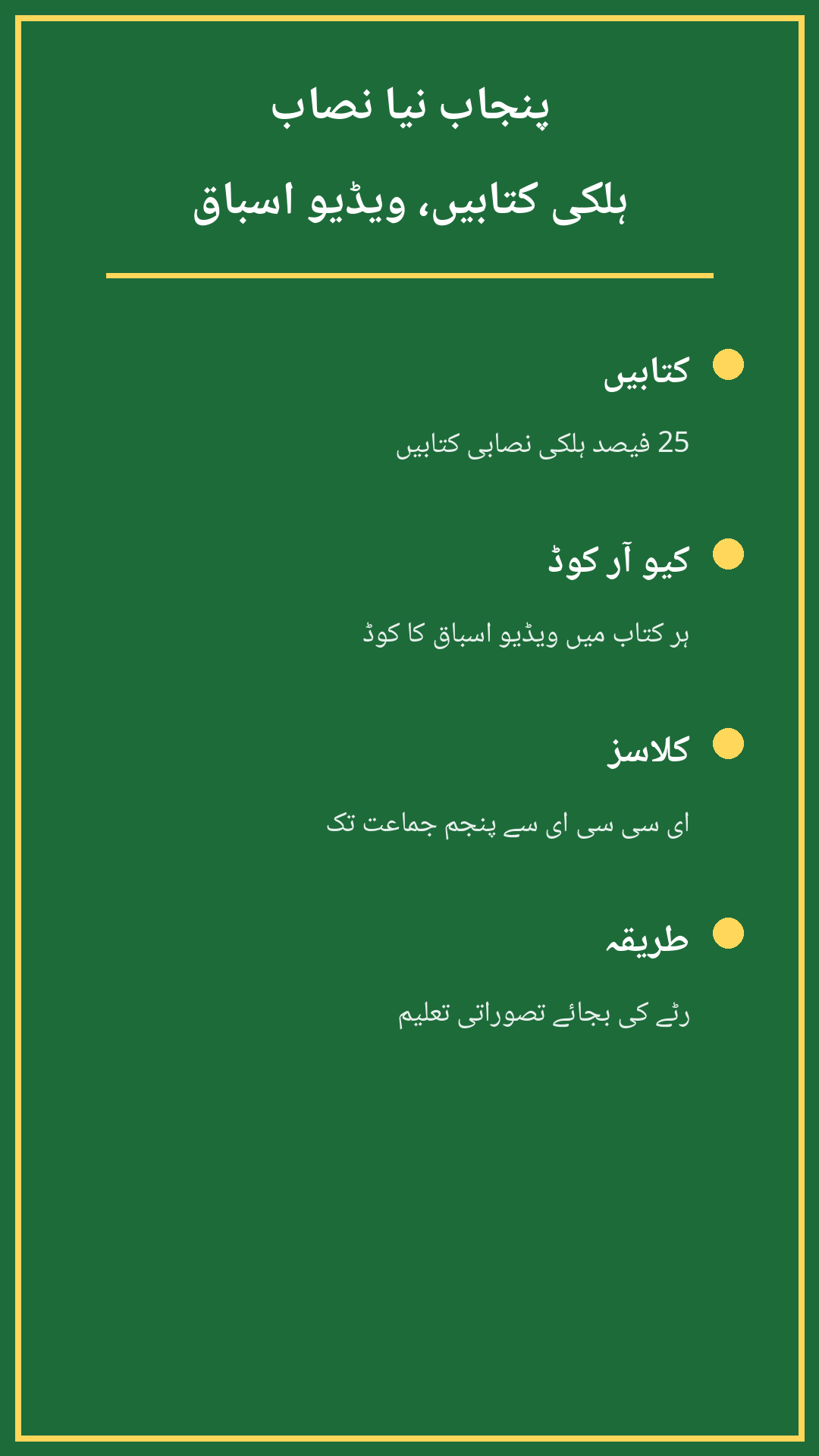
Punjab’s primary-school students are set for lighter schoolbags and digital lessons from the next academic session, as the province prepares a revised curriculum for Early Childhood Care and Education (ECCE) to Grade V. The new curriculum promises textbooks that are 25% lighter, with QR codes in every book linking students to video lessons on the topic they are studying.
Detail
Confirmed Information
Reform
Revised Punjab curriculum for ECCE to Grade V
Textbook reduction
25% lighter textbooks
Digital feature
QR codes in textbooks linking to video lessons
Prepared by
Punjab Education Curriculum, Training and Assessment Authority (PECTAA)
International review
Curriculum sent to Cambridge International Education for assessment and comparison
Final content
Expected in December
Printing
Begins in January
Books available
Before the new academic session beginning in April
What Changes for Young Students
The reform targets the heavy-bag problem that parents and educationists have raised for primary children, who often carry textbooks plus grammar and mathematics practice books, general knowledge material, computer books, activity workbooks and supplementary resources.
25% lighter textbooks: The volume of prescribed textbooks will fall by 25% under the revised curriculum.
QR video lessons: Students will scan QR codes in their textbooks on a digital device to watch video lessons related to each topic.
Conceptual learning: The shift is towards digital and conceptual learning, away from rote memorisation, so difficult mathematics and science topics can be explained through demonstrations.
Learning at home: The video component also lets students revise lessons at home and learn at their own pace.
Subjects covered: The curricula reviewed for the reform cover English, Mathematics, Social Studies, Urdu and Early Childhood Care and Education (ECCE).
PECTAA has already prepared the revised curriculum, and the remaining steps run through December, January and April.
Prepared by PECTAA: The revised ECCE to Grade V curriculum has been prepared by the Punjab Education Curriculum, Training and Assessment Authority.
Cambridge assessment: The curriculum has been sent to Cambridge International Education for assessment and comparison with international standards.
December milestone: The final curriculum content is expected to be ready in December.
January printing: PECTAA will begin printing the revised textbooks in January.
April session: The books are scheduled to be available before the beginning of the new academic session in April.
What Educationists Say to Watch
The reform is welcome, but educationists caution that lighter textbooks alone will not automatically reduce pressure on children.
Supplementary books matter: The real benefit will depend on whether schools also review supplementary reading requirements.
Homework and exams: Homework policies and examination practices will also need review, or children will still face a heavy workload.
Following the curriculum: Public and private schools will need to follow the revised curriculum without unnecessarily expanding the prescribed workload.
Why it matters: The reform aims to reduce academic pressure on young students and modernise the primary education system in Punjab.
Contact and Helpline Details
Channel
Detail
Responsible authority
Punjab Education Curriculum, Training and Assessment Authority (PECTAA)
International review
Cambridge International Education (assessment and comparison with international standards)
Applies to
Early Childhood Care and Education (ECCE) to Grade V students in Punjab
Conclusion
Punjab’s new primary curriculum is a practical reform for young learners: 25% lighter books, QR-linked video lessons, and a move from memorisation to understanding, with books due before the April session. Its success will depend on schools keeping supplementary workload in check — but for parents tired of heavy schoolbags, the direction is clearly the right one.
FAQs
Which classes does the new Punjab curriculum cover?
Early Childhood Care and Education (ECCE) to Grade V.
How much lighter will the textbooks be?
Textbook volume will reduce by 25% under the revised curriculum.
What do the QR codes in the books do?
Students scan the QR codes with a digital device to access video lessons related to the topic in the book.
When will the new books be available?
Final curriculum content is expected in December, printing begins in January, and the books are scheduled to be available before the new academic session beginning in April.
Shahzad Sahil is the editor of plcpunjab.pk, covering Punjab government schemes including the Livestock Card, eligibility, registration and latest updates, with information verified from official sources for readers across Punjab.
Students and professionals across Pakistan can now enrol in nine free online courses in Artificial Intelligence and Cybersecurity offered by the Virtual University of Pakistan in collaboration with Cisco Networking Academy. Announced on 3 November 2026, the eight-week Learn-A-Thon 2026 runs through the university’s Professional Development Center, is fully self-paced, and offers Cisco digital badges…
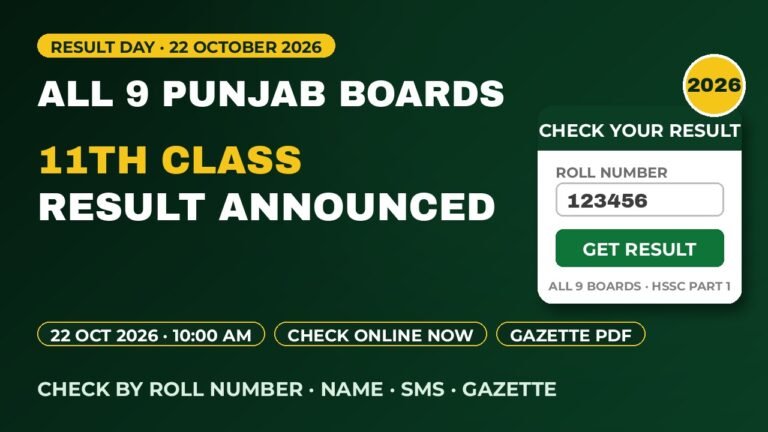
The wait is finally over for first-year students across Punjab. The 11th class result 2026 for the HSSC Part 1 Annual Examination has been announced today, Thursday, 22 October 2026, at 10:00 AM (PKT), and the result is now LIVE. All nine boards of Punjab — Lahore, Multan, Gujranwala, Faisalabad, Rawalpindi, Sargodha, Bahawalpur, DG Khan…
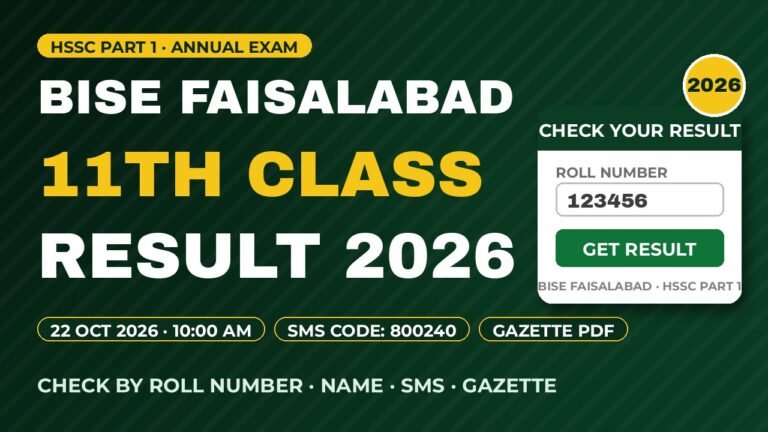
The Board of Intermediate and Secondary Education (BISE) Faisalabad has announced the 11th Class Result 2026 for the HSSC Part 1 Annual Examination today, Thursday, 22 October 2026, at 10:00 AM (PKT) — the result is now LIVE. Students from Faisalabad, Chiniot, Jhang and Toba Tek Singh can check their marks on the official website…
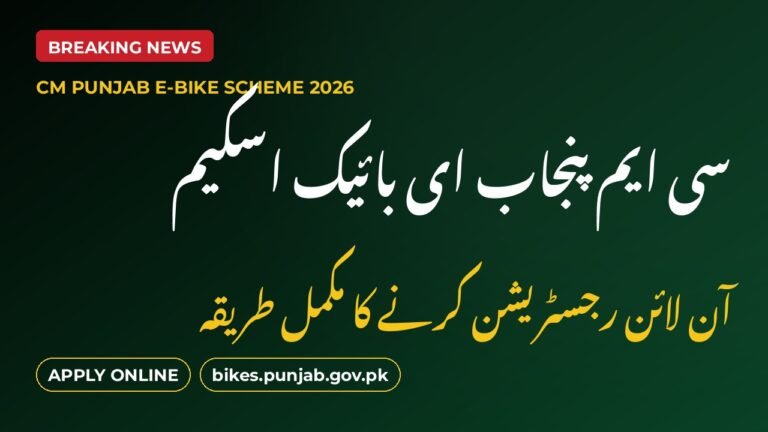
Applications for this round of the CM Punjab E-Bike Scheme closed on 4 October 2026. Over 1.3 million students registered and 607,399 completed their applications. Verification is running through October, and 100,000 students will be selected through computerized balloting. The CM has announced that distribution will begin in November 2026. The CM Punjab E-Bike Scheme…
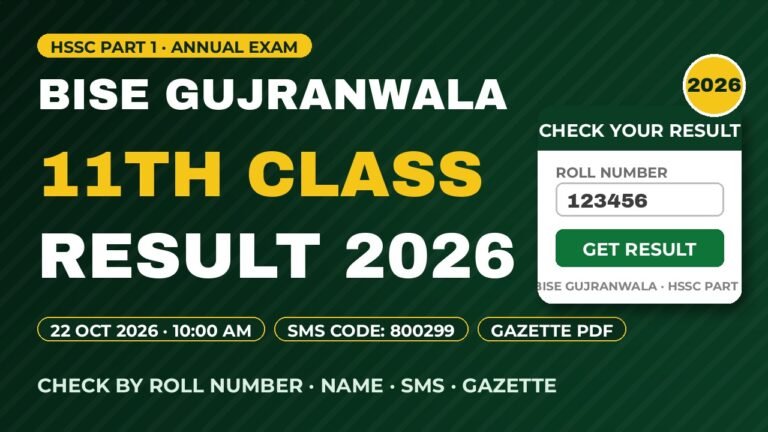
Students of Gujranwala Board can relax now, because the result date is confirmed. The Board of Intermediate and Secondary Education (BISE) Gujranwala has announced the 11th Class Result 2026 for the HSSC Part 1 Annual Examination today, Thursday, 22 October 2026, at 10:00 AM (PKT) — the result is now LIVE. Students from Gujranwala, Gujrat,…
Rasul is set to get its own medical college. At a ceremony at the University of Rasul on 27 October 2026, it was announced that Rasul Medical College will open admissions in January 2027, with a state-of-the-art teaching hospital planned in Rasul. For students in Mandi Bahauddin and nearby districts, this is a major step…