Punjab Livestock Card Phase II Eligibility 2026: Who Can Apply for Rs 27,000 Per Animal Loan
Phase II of the Punjab Livestock Card offers an interest-free loan of Rs 27,000 for every eligible animal, but the money is not open to every farmer who applies. Eligibility is a test with several separate checks, and failing any one of them stops your application. This guide works through that test in depth: which animals count, what records you need, which checks are run, and what to do if you fall short today.
Eligibility point
What Phase II requires
Loan per animal
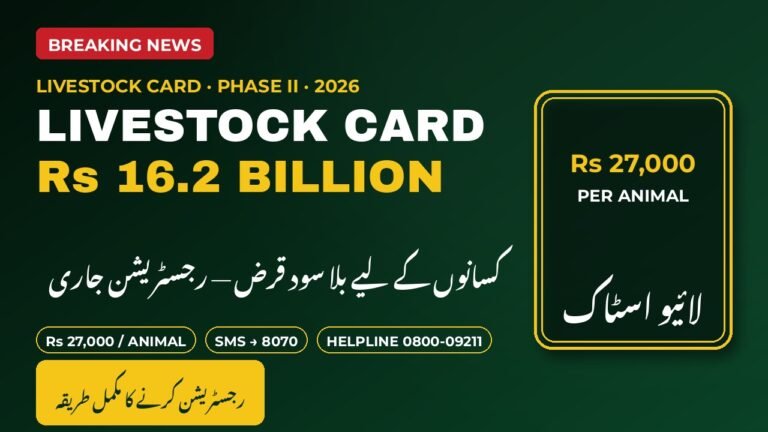
Rs 27,000, interest-free, for feed, silage and mineral mixtures
Total Phase II financing
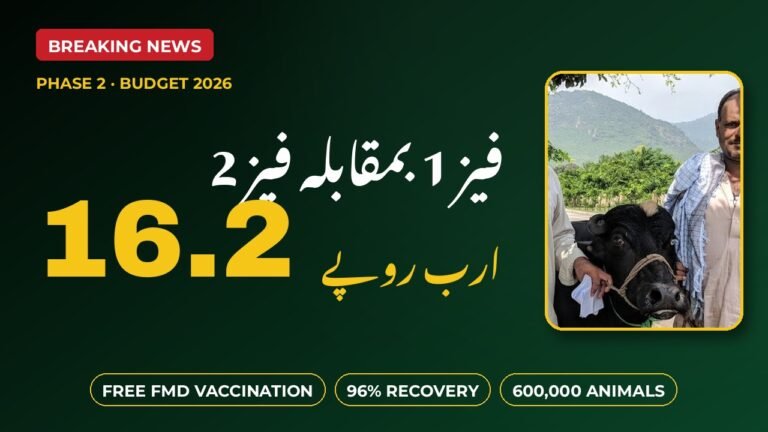
Rs 16.2 billion over two years, targeting 600,000 animals
Animals needed
5 to 20 animals, registered in the SPMS-9211 system
Residence
Permanent resident of Punjab province
Identity
Valid CNIC, plus a mobile SIM registered in your own name
Credit record
No uncleared default on previous bank or government loans
Which Animals Count Toward Eligibility
The first eligibility question is not how many animals you own in total, but how many of them the scheme counts. Under the scheme’s established criteria, the qualifying herd is 5 to 20 animals, commonly described as 5 to 10 male calves kept for fattening. That description matters, because the card is a feed loan for fattening animals, not a general grant. Animals kept for other purposes do not strengthen your application.
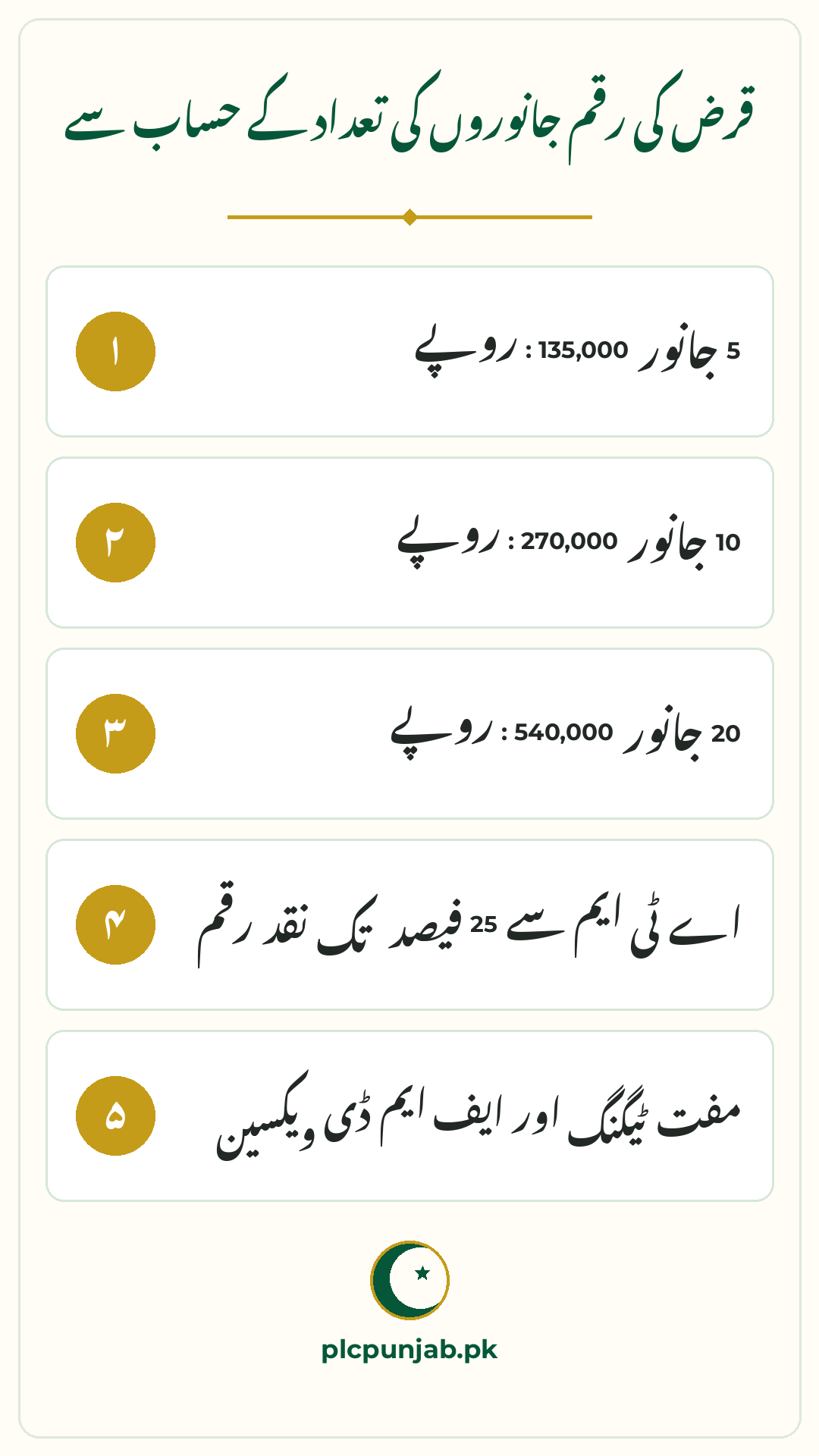
The Phase II launch announcement did not publish a new herd limit, so the established range remains the working rule. The count fixes your loan size directly: five qualifying animals mean Rs 135,000, and twenty mean Rs 540,000, and an inflated count is caught at verification.
Qualifying herd: 5 to 20 animals under the established criteria
Standard description: 5 to 10 male calves kept for fattening
Purpose matters: the loan is feed credit for fattening, not a general grant
Count fixes the loan: Rs 27,000 multiplied by eligible animals
The second check is the record. The Livestock Department runs the SPMS-9211 registration system, and your animals need to be registered in it before your application can pass. Registration turns your herd from a claim into a verifiable record, and the department cross-checks your application against it. If your animals are not registered yet, visit your nearest Livestock Department office or Civil Veterinary Hospital and get them tagged and enrolled first.
This step cannot be skipped. An unregistered herd has no record for the verification team to match. Phase II also adds a benefit here: animals get free tagging and free vaccination against foot-and-mouth disease.
Registration system: SPMS-9211, run by the Livestock Department
Why it matters: your application is cross-checked against this record
Not registered yet: get animals tagged at your veterinary hospital first
Free extras: animal tagging and foot-and-mouth disease vaccination
A Valid CNIC, Your Own SIM, and Punjab Residence
The third check is identity, and it has three parts that must all match. You must be a permanent resident of Punjab, because this is a provincial scheme. You must hold a valid CNIC, and you must apply from a mobile SIM registered in your own name, the same name as your CNIC. If your SIM is on your brother’s CNIC, the system will not match your record.
Two small items block more applications than anything else: an expired CNIC and a wrong-name SIM. The fix is simple but takes a little time, so do it before you apply. Renew an expired CNIC at NADRA, and change your SIM into your own name through your mobile network’s biometric verification.
Punjab residence: permanent residents of Punjab province only
Valid CNIC: expired cards are not accepted, renew at NADRA first
Own-name SIM: the application must come from your own SIM
Matching details: the CNIC and SIM name must be the same person
Credit Check and Physical Verification
The fourth check is financial, and the fifth is physical, and both are run on every applicant. Because the card is a loan facility, the bank runs a credit check on your record. Farmers with a history of defaulting on bank or government loans may be held back until the record is cleared. This protects the 96 percent recovery rate that Phase I achieved, with 23,312 cards prepared and more than 70,000 transactions completed.
After the record checks, department staff physically verify your animals. This visit confirms that the animals exist, that they are in your possession, and that the count in SPMS-9211 matches reality. The final loan amount is fixed by your verified animal count, not by the number you wrote on the form.
Credit check: the bank verifies your credit history for every applicant
Old default: clear it with your bank before applying
Physical visit: staff confirm animals exist, are yours, and match SPMS-9211
Final amount: fixed by verified animals, not the number on the form
Documents That Prove Each Eligibility Point
Eligibility is proved with records, not with claims, so gather your proof before you apply. Your original CNIC proves identity and residence, and it must be valid, not expired. Your SPMS-9211 record, with your animals tagged and enrolled, proves your herd and your count. Your own-name SIM must match your CNIC, and your bank’s clearance proves an old default is settled.
Keep these records consistent with each other. A CNIC address outside Punjab, a SIM in another person’s name, or a herd count that differs from the SPMS-9211 record will each raise a question at verification. If you are unsure, call the helpline 0800-09211 with your CNIC in hand and ask them to check your position before you apply.
CNIC: original, valid card proving identity and Punjab residence
SPMS-9211 record: tagged and enrolled animals proving herd and count
Own-name SIM: registration matching your CNIC name
Bank clearance: proof an old default is settled, if one existed
Who Is Excluded, and What to Do If You Are Ineligible
Some farmers do not meet the criteria, and knowing this upfront saves everyone time. Farmers outside Punjab, farmers whose animals are not registered in SPMS-9211, applicants without a valid CNIC or own-name SIM, and borrowers with uncleared defaults will not pass. If you are looking for free animals rather than a feed loan, that is a different government programme.
Being ineligible today is usually fixable. Register your animals at the veterinary hospital, renew your CNIC at NADRA, transfer your SIM into your own name, or settle an old default with your bank, then apply once the record is clean. Phase I farmers have an easier path: if you already hold a Livestock Card from Phase I, you keep using the same card in Phase II. Once you qualify, applying itself is short: send an SMS with the word PLC and your CNIC number to 8070 from your own SIM, use the official portal plc.punjab.gov.pk, or visit your nearest veterinary hospital for free help.
Outside Punjab: the card is only for Punjab livestock farmers
No SPMS-9211 record: enrol your animals first, then apply
Expired CNIC or wrong-name SIM: fix these before applying
Uncleared loan default: settle it with your bank first
Phase I cardholders: keep using the same card in Phase II
Eligible animals
Interest-free loan (example)
5 animals
Rs 135,000
10 animals
Rs 270,000
15 animals
Rs 405,000
20 animals
Rs 540,000
Cash through ATMs
Up to 25 percent of the loan amount
Conclusion
To qualify for Phase II, you need 5 to 20 SPMS-9211-registered animals kept for fattening, Punjab residence, a valid CNIC, a SIM in your own name, and a clean credit record, and you must pass both the bank’s credit check and the department’s physical verification. Gather the documents that prove each point, fix any weak point first, and the Rs 27,000 per animal interest-free loan is within reach.
FAQs
How many animals do I need to be eligible?
Under the scheme’s established criteria, you need between 5 and 20 animals, commonly described as 5 to 10 male calves for fattening. Your animals must be registered in the SPMS-9211 system.
Which animals count toward my herd?
The animals that count are the ones registered in SPMS-9211, in your possession, and kept for fattening. The card is a feed loan, so the verified count fixes your loan amount.
My animals are not registered in SPMS-9211. Can I still apply?
First get your animals tagged and enrolled at your nearest Livestock Department office or Civil Veterinary Hospital. Once your record exists, you can apply for the card normally.
What documents prove my eligibility?
Your valid original CNIC, your SPMS-9211 record for herd and count, your own-name SIM matching your CNIC, and bank clearance if you ever had a loan default.
Do Phase I farmers need a new card for Phase II?
No. Phase I cardholders keep using their existing cards for Phase II. If you repaid on time in Phase I, your record works in your favour.
Shahzad Sahil is the editor of plcpunjab.pk, covering Punjab government schemes including the Livestock Card, eligibility, registration and latest updates, with information verified from official sources for readers across Punjab.
Phase 1 proved the Livestock Card works. Phase 2 makes it bigger and better in 2026 — more budget, more farmers, free vaccination, and the Connect Portal. Here is the full comparison of what changed and what stayed the same. Detail Information Feature Livestock Card Phase 1 vs Phase 2 Phase 1 Pilot — limited…
The CM Punjab Livestock Card is a financial assistance program introduced by the Punjab Government to support livestock farmers through interest-free loans of up to Rs. 540,000. The scheme helps eligible farmers purchase animal feed, silage, mineral mixtures, and other approved livestock inputs without paying interest. By reducing financial pressure, the program aims to improve…
Phase 2 of the Livestock Card is here in 2026, and thousands of new farmers are being registered across Punjab. If you missed Phase 1 — or were rejected — this step-by-step guide shows you exactly how to register in Phase 2, from the first SMS to card activation. Detail Information Feature Livestock Card Phase…
The Livestock Card is changing the lives of women farmers across Punjab. Women now get special support to build livestock businesses of their own. This guide covers the benefits for women, who can apply, and the step-by-step process — with all the latest 2026 updates. Detail Information Feature Livestock Card for women farmers Women Cardholders…
The registration window for the Punjab Livestock Card Phase II is now open, and Rs 16.2 billion in interest-free loans are waiting for eligible livestock farmers. If you keep cattle or buffaloes in Punjab, this phase offers Rs 27,000 per animal for feed, without a single rupee of interest. This guide explains who can register,…
Skip the queues — register for the Livestock Card online from your phone or computer in 2026. The online registration portal is faster, gives you a tracking number, and lets you fix mistakes before submitting. This guide walks you through every screen. Detail Information Feature Livestock Card online registration Portal plc.punjab.gov.pk Needs CNIC, registered mobile,…