If you live in a city in Punjab, your October post may have brought a bill you have never seen before. Under the Suthra Punjab programme, sanitation billing for urban homes and shops began in October 2026, with paper bills delivered to about five million properties across the province. The monthly fee depends on the size of your property, and clearing it has now become a condition for property sale documents. This guide brings together the confirmed rates, the payment rules and the steps to check your own bill.
Programme detail
Confirmed position
Billing announced
1 October 2026
Paper bill delivery started
2 October 2026, urban areas
Properties covered
About 5 million urban homes and shops
Fee applies from
1 July 2026
First bills cover
July, August and September 2026
Official portal
suthra.punjab.gov.pk
Suthra Punjab billing dates explained
The billing did not arrive without warning. It followed a formal process in which the Punjab cabinet approved the fee structure, the Suthra Punjab Authority signed a collection agreement with the Excise, Taxation and Narcotics Control Department, and the department then took over billing from the 2026-27 financial year. Understanding this sequence helps you judge any message or list that reaches you on social media, because wrong dates are the most common source of confusion in this story.
The Punjab cabinet approved the proposed fee structure in August 2026, setting monthly rates by property size and type.
On 23 September 2026, the Suthra Punjab Authority and the Excise Department signed the agreement for collection of the fee.
Billing for urban properties was announced on 1 October 2026, with the system taking effect from 1 July 2026.
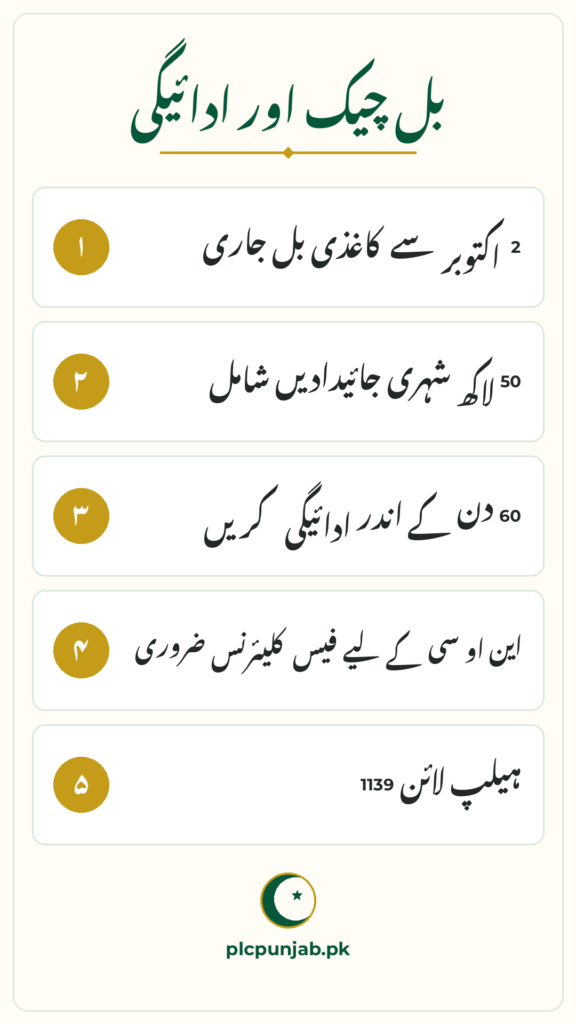
Physical delivery of paper bills in urban areas began on 2 October 2026, with inspectors in each circle delivering bills to owners.
The first bills are consolidated bills covering July, August and September, so the first amount you see will be roughly three months of fees.
The Excise Department receives a one percent service charge for handling billing and collection under the agreement.
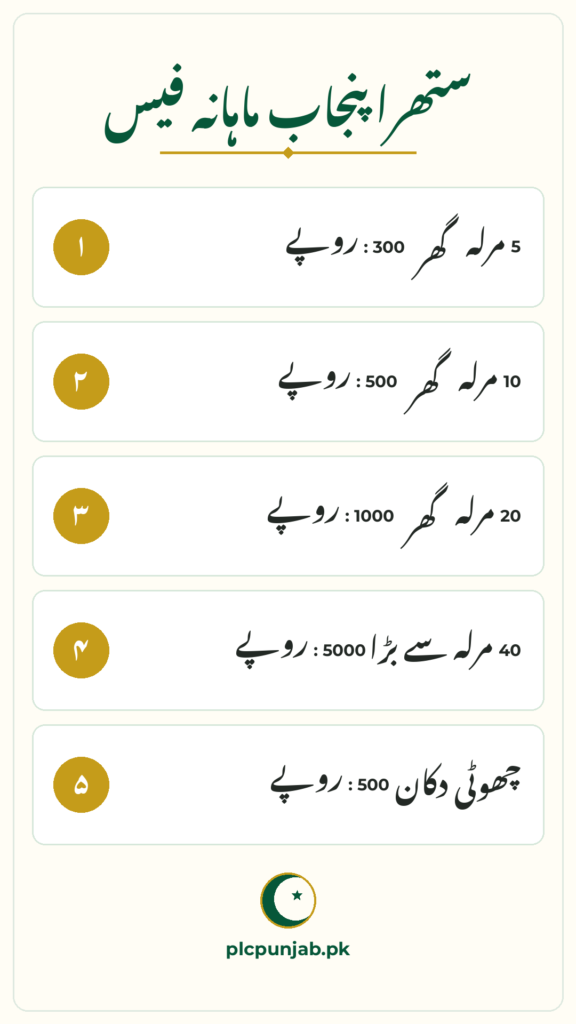
For most families, the only figure that matters is the monthly rate for their own home. The notified rates for urban residential properties are fixed by property size, and they have been reported consistently by national newspapers from the official notification. A small five marla home pays the lowest rate, while very large houses pay the highest rate in the scale.
Urban home up to 5 marla: Rs 300 per month, the lowest residential rate in the scale.
Urban home from 5 to 10 marla: Rs 500 per month, the rate for most small and mid-size city houses.
Urban home from 10 to 20 marla: Rs 1,000 per month, so a three-month first bill for this band is around Rs 3,000.
Urban home from 20 to 40 marla: Rs 2,000 per month under the notified tariff.
Urban home above 40 marla: Rs 5,000 per month, the top residential rate in the October notification.
Rural homes pay less than city homes, with reported monthly rates between Rs 200 and Rs 400 depending on the category.
Always confirm the amount printed on your own bill, because your property category on record decides the rate applied to you.
Commercial sanitation fee rates for shops
Shops, offices and other commercial premises in cities are billed on a separate scale that depends on the size of the business rather than marla measurements alone. Traders and small business owners should check which band their premises fall into, because the difference between bands is large over a full year.
Small commercial premises in urban areas: Rs 500 per month.
Medium-sized commercial premises: Rs 1,000 per month.
Large commercial premises and factories: Rs 3,000 per month.
Commercial billing follows the same October start as residential billing, with consolidated bills for the first quarter.
If your shop category looks wrong on the bill, raise it with the Excise Department for correction rather than paying a wrong amount in silence.
Keep the paid bill receipt safe, because it is also the proof you will need for property documents later.
Property type
Monthly fee
Urban home, up to 5 marla
Rs 300
Urban home, 5 to 10 marla
Rs 500
Urban home, 10 to 20 marla
Rs 1,000
Urban home, 20 to 40 marla
Rs 2,000
Urban home, above 40 marla
Rs 5,000
Urban commercial premises
Rs 500 small, Rs 1,000 medium, Rs 3,000 large
How to check and pay your bill
When your paper bill arrives, you do not have to rely on it alone. The bill carries a 20-digit PSID, and the official portal offers a bill check facility where you can view your billing period, category and payable amount. The portal does not find bills by CNIC, so keep the paper bill or at least its PSID safe until payment is complete.
Find the 20-digit PSID printed on your paper bill and keep it safe.
Open the official portal and use its Bill Check Online facility with that PSID.
Check that the property category and billing period on screen match your own property.
Property owners must pay within 60 days of receiving the bill, and late payment carries a penalty.
An online payment facility was also announced for October, alongside the paper bill delivery.
If the bill amount or category is wrong, contact the Excise Department for correction under the collection agreement.
Never hand your bill or payment to an agent who promises a discount or a shortcut; use the official channels only.
Property NOC rule linked to fee clearance
The second major October update concerns property transfers. The Excise Department will not issue a No Objection Certificate for a property sale or purchase unless the sanitation fee is cleared along with the property tax. Before this change, only property tax clearance was checked, so many buyers and sellers were caught by surprise when the new condition appeared while bills were still being delivered.
Old rule: an NOC needed only property tax clearance before the sale could proceed.
New rule: sanitation fee clearance is also compulsory before an NOC is issued.
Effect reported in October: some property deals slowed down while owners waited for bills or clearance.
Reason: the NOC condition was enforced while province-wide bill distribution was still under way.
Safe move: clear your fee early if you plan to sell or buy property in the coming months.
Keep both receipts, for property tax and for the sanitation fee, together with your transfer file.
Why the fee was introduced and what it funds
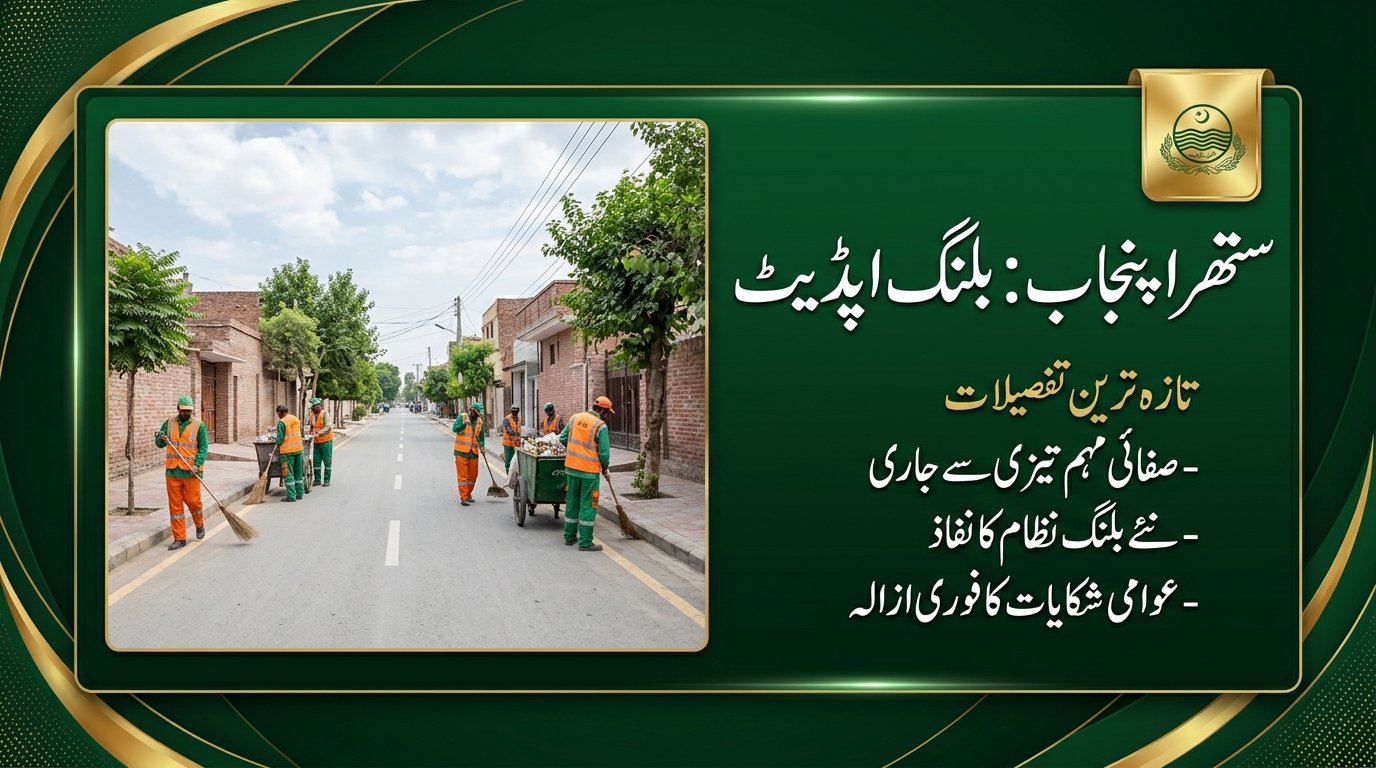
Suthra Punjab is a very large operation, and the fee is meant to give it its own income instead of leaving waste collection as a general expense. According to the programme’s own figures, it works across 41 districts and 146 tehsils, with a workforce and fleet far larger than most citizens realise. The government expects the sanitation fee alone to bring in about Rs 40 billion a year, with combined property tax and sanitation collection crossing Rs 82 billion.
Coverage: 41 districts and 146 tehsils across Punjab under the programme.
Workforce: about 180,000 sanitation workers engaged in daily collection work.
Fleet: about 40,000 vehicles used for collection and transport of waste.
Daily waste: more than 55,000 tons handled every day across the province.
Expected income: about Rs 40 billion a year from the sanitation fee alone.
Cleanliness enforcement is running alongside billing, with the official helpline 1139 for complaints about uncollected waste in your area.
In Lahore, anti-littering fines moved from warnings to formal penalties on 1 October 2026 for commercial markets and major roads.
Conclusion
The October 2026 position is clear: billing for about five million urban properties began with paper delivery from 2 October, monthly fees run from Rs 300 for small homes to Rs 5,000 for the largest houses, first bills cover three months and must be paid within 60 days of receipt, and property NOCs now need sanitation fee clearance as well. Check your bill with its PSID, confirm your category, and pay through official channels before the deadline on your bill.
FAQs
When did Suthra Punjab bill delivery start in October 2026?
Physical delivery of paper bills in urban areas began on 2 October 2026. Billing itself was announced on 1 October 2026, and the fee applies from 1 July 2026.
How much will a 10 marla urban house pay each month?
A house of 10 to 20 marla in an urban area pays Rs 1,000 per month under the notified tariff. A house up to 5 marla pays Rs 300, and a 5 to 10 marla house pays Rs 500 per month.
How long do I have to pay the first bill?
Property owners must pay within 60 days of receiving the bill, and late payment carries a penalty. Check the date and period printed on your own bill as well.
Does a property sale need sanitation fee clearance?
Yes. The Excise Department will not issue an NOC for a property sale or purchase unless both the property tax and the sanitation fee are cleared.
What should I do if my bill category is wrong?
Contact the Excise Department for correction under the collection agreement, and keep your paper bill and PSID safe until the correction is made.
Shahzad Sahil is the editor of plcpunjab.pk, covering Punjab government schemes including the Livestock Card, eligibility, registration and latest updates, with information verified from official sources for readers across Punjab.
Punjab residents can now apply for, renew and manage a driving licence online without repeated visits to a licence office. Applications run through Dastak, the Punjab government’s service delivery platform, while verification and e-licence downloads run through DLIMS. This guide explains the learner permit, the 42-day wait, the driving test, the documents you need and…
Factory workers in Punjab no longer have to lose a day’s wages for a simple checkup. On Monday, 12 October 2026, Chief Minister Maryam Nawaz Sharif launched the Social Security Mobile Health Units in Lahore. A fleet of 65 mobile units will now bring free treatment to industrial workers and their families at their workplaces…
The Gujranwala Yellow Line and Faisalabad Mass Transit projects have a firm deadline: March 2027, with no extension allowed, according to directions from Punjab Chief Minister Maryam Nawaz Sharif. The two systems will give Gujranwala and Faisalabad their first organised mass transit networks, easing daily travel in two of Punjab’s busiest industrial cities. Work is…
SNGPL new gas connections have been suspended indefinitely, according to reports published on 1 November 2026. Sui Northern Gas Pipelines Limited has extended its ban on new domestic connections, and the restriction now also covers commercial connections, including those for tandoors and hotels, from November. No date has been announced for resuming new connections, and…
Green Tractor Scheme Latest Update 2026: Phase IV Result and Phase V Progress September and October 2026 moved very fast for the Punjab Green Tractor Scheme, and many farmers are now confused about what is done and what is still pending. Here is the simple picture. Phase IV is complete till the balloting stage, and…
Silver rate in Pakistan today, 3 November 2026, is anchored by the latest association market rate of Rs 5,488 per tola. According to rates reported from the All-Pakistan Gems and Jewellers Sarafa Association (APGJSA), silver rose Rs 100 per tola on Monday, 2 November 2026, recovering part of the previous session’s fall. This article gives…