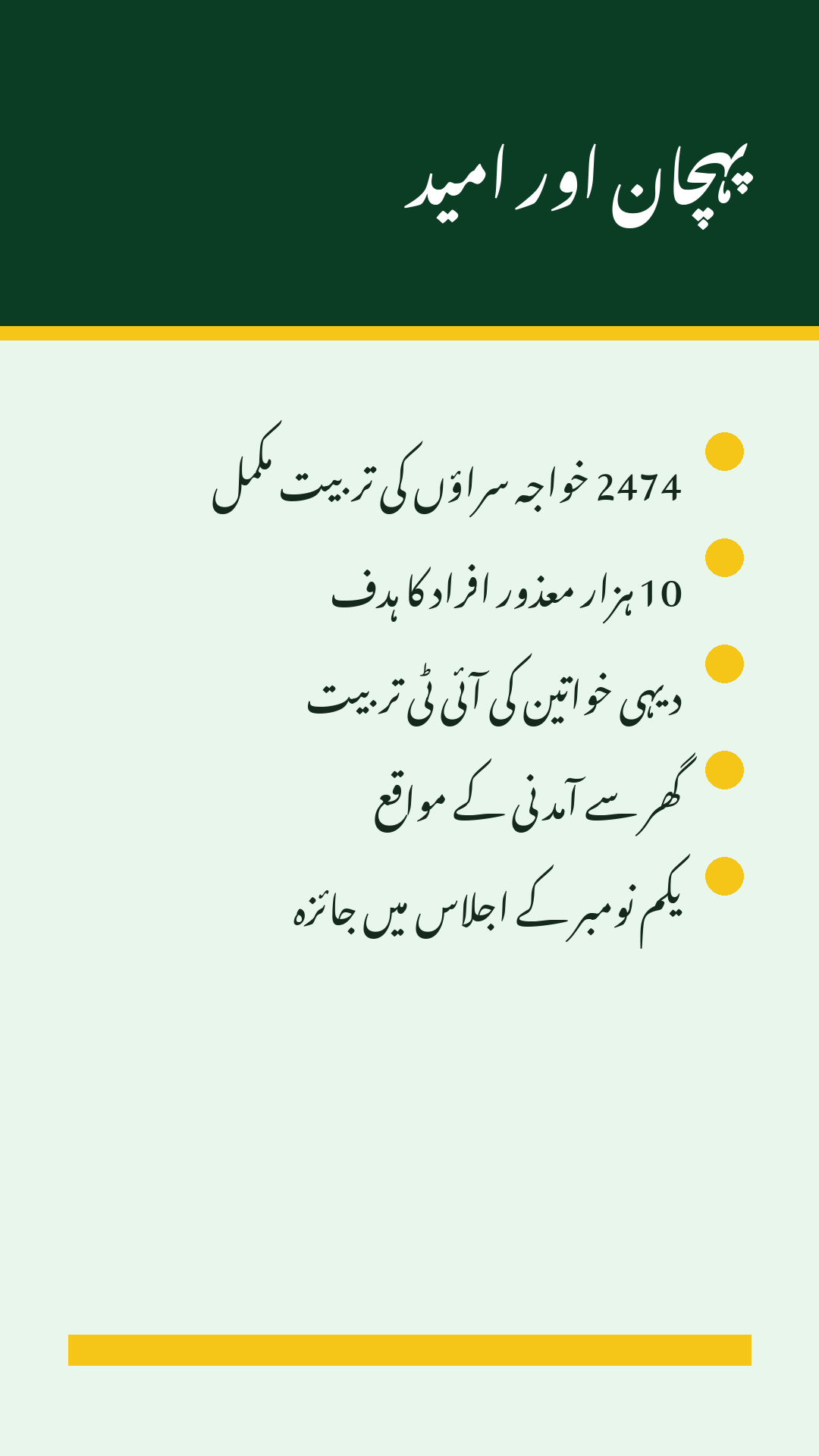
Punjab’s skills training drive is reaching groups often left out of mainstream employment programmes, with training completed for 2,474 transgender people under Pehchaan and Umeed, and a target to train 10,000 persons with disabilities under Umeed. The figures were shared at a skills meeting chaired by Chief Minister Maryam Nawaz Sharif on 1 November 2026. Alongside this, 3,000 rural women are already earning from home through an information technology programme. This guide explains what Pehchaan and Umeed offer and who they are for.
Item
Detail
Programmes:
Pehchaan and Umeed skills training programmes
Training completed:
2,474 transgender people trained
Umeed target:
Skills training for 10,000 persons with disabilities
Women earning from home:
3,000 rural women under the IT programme
Reviewed at:
Skills meeting chaired by the Chief Minister, 1 November 2026
What Are Pehchaan and Umeed
Inclusion focus: The programmes focus on transgender people and persons with disabilities, groups often excluded from regular employment.
Skills first: The core offer is practical skills training that can lead to work and income, rather than one-time financial aid.
2,474 trained: Training has already been completed for 2,474 transgender people under the two programmes.
10,000 target: The Umeed programme aims to provide skills training to 10,000 persons with disabilities.
Part of a bigger plan: The programmes sit inside a wider provincial push to expand technical and vocational training.
Chief Minister’s review: Progress was reviewed at a special meeting chaired by Chief Minister Maryam Nawaz Sharif on 1 November 2026.
Meeting date: Progress was reviewed at a special meeting chaired by Chief Minister Maryam Nawaz Sharif on 1 November 2026.
Barriers to work: Transgender people and persons with disabilities often face rejection when applying for ordinary jobs.
Training as a bridge: A recognised skill gives trainees something concrete to offer employers or clients.
Income and dignity: Earning an income brings independence and dignity, not just financial support.
Completed training: The 2,474 figure shows completed training, not just enrolment, which matters for real outcomes.
Scale still growing: The 10,000 target for persons with disabilities shows the programme is meant to grow well beyond its current reach.
Government backing: Review at the Chief Minister’s level signals that inclusion training is a provincial priority, not a side project.
Priority signal: Review at the Chief Minister’s level signals that inclusion training is a provincial priority, not a side project.
Women Earning From Home Through IT
Empowering Women through IT: Under this programme, women in rural areas are trained in information technology skills.
3,000 women earning: Officials said 3,000 women in rural areas were already earning an income from home.
Work-from-home model: IT work can be done from home, which suits women who cannot travel daily to an office.
Rural reach: The programme deliberately targets rural areas, where formal job opportunities for women are fewer.
Income, not just training: The reported result is actual earning, which is the real test of a skills programme.
Part of the same review: The women IT programme was reviewed at the same 1 November skills meeting.
Home-based work: IT skills suit home-based work, which matters for women who cannot travel daily to an office.
Income proof: The reported result for the women IT programme is actual earning, which is the real test of a skills programme.
How This Fits Punjab’s Wider Skills Push
One million youth target: The Chief Minister set a target to train one million young people over three years.
Mahir programme: Under Mahir, 25,000 young people will be trained in industrial clusters in Lahore, Faisalabad, Sialkot, Gujranwala and Multan.
Global Rozgar programme: Global Rozgar aims to train 25,000 young people for the business process outsourcing sector.
Advance Tech programme: Advance Tech will provide internationally recognised certifications in emerging technologies to 7,500 people.
Haryali programme: The Rs2.6 billion Haryali programme will train 20,000 young people in agriculture and green fields.
Centres of excellence: New specialised centres, including a modern Woodworking Centre of Excellence, were approved at the same meeting.
What Eligible People Should Do Next
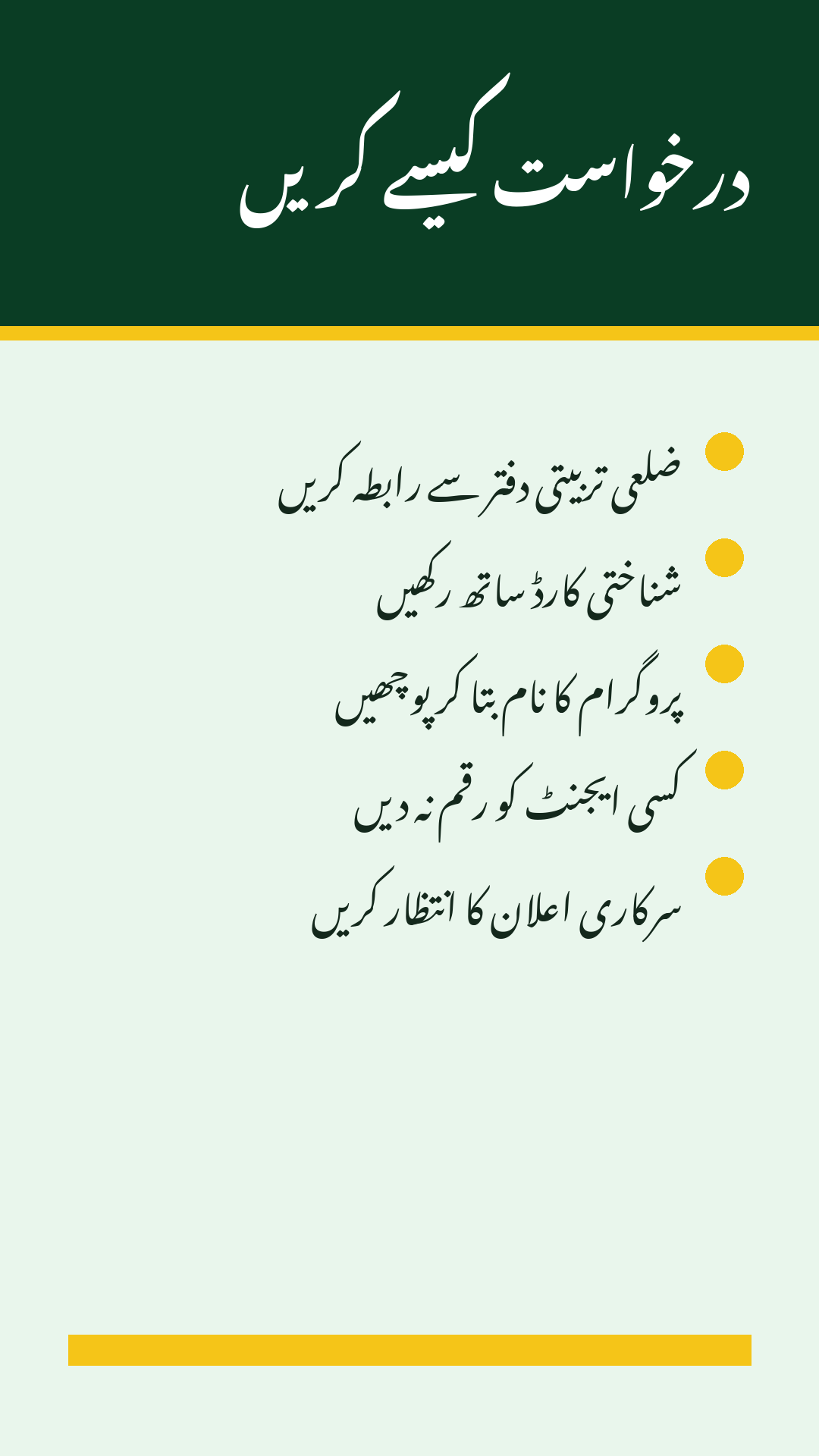
Watch official announcements: New intake details are normally announced through the provincial skills and vocational training channels.
Contact the district office: District-level technical and vocational training offices can guide applicants to the right programme.
Keep documents ready: Keep your CNIC and any disability or registration documents ready for when intake opens.
Do not pay agents: Government skills programmes do not require payment to agents for enrolment.
Ask about Umeed specifically: Persons with disabilities should ask for the Umeed programme by name at skills offices.
Women IT applicants: Rural women interested in IT work from home should ask about the Empowering Women through IT programme.
District first step: The district technical and vocational training office is the first place to ask about Pehchaan and Umeed intake.
Ask by name: Applicants should ask for Pehchaan and Umeed by name, so staff direct them to the right programme.
Contact and Helpline Details
Need
Where to go
Pehchaan and Umeed intake:
District technical and vocational training office
Women IT programme:
Provincial skills training offices and official announcements
Programme information:
Punjab skills development authorities through district offices
Dedicated helpline:
None published with the 1 November meeting details
Fraud warning:
Never pay an agent for enrolment in a government skills programme
Conclusion
Pehchaan and Umeed show a quieter side of Punjab’s skills push: 2,474 transgender people trained, a 10,000 target for persons with disabilities, and 3,000 rural women earning from home through IT. Stay in touch with district skills offices, and pay no agent.
FAQs
Who are Pehchaan and Umeed for? Pehchaan and Umeed are skills training programmes for transgender people and persons with disabilities in Punjab.
What is the Umeed target? The Umeed programme aims to provide skills training to 10,000 persons with disabilities.
How do I apply? No separate portal was published, so contact your district technical and vocational training office and watch for announcements.
Shahzad Sahil is the editor of plcpunjab.pk, covering Punjab government schemes including the Livestock Card, eligibility, registration and latest updates, with information verified from official sources for readers across Punjab.
If you applied for a subsidised tractor this year, one question matters more than any other: did your name come up in the draw? The Green Tractor Scheme Phase IV result check 2026 is the step every applicant in Punjab is now searching for, because the balloting for this round has already taken place and…
The Punjab Mazdoor Card is a smart card for the workers of Punjab, issued through the Punjab Employees Social Security Institution (PESSI) in partnership with the Bank of Punjab. It works both as the worker’s official identity card and as an ATM debit card, connecting registered factory and commercial workers to free hospital treatment, welfare…
Punjab Chief Minister Maryam Nawaz Sharif inaugurated 127 development projects in Attock on 3 November 2026, including 59 road construction and rehabilitation schemes worth Rs23 billion. The projects were inaugurated during her visit to the district, where she also distributed laptops and Honhaar Scholarships to students at COMSATS University, Attock. Officials said 850 kilometres of…
Punjab Chief Minister Maryam Nawaz Sharif has approved fresh applications under the Apni Chhat Apna Ghar housing scheme, opening the door for more low-income families across the province to apply for an interest-free home loan. The decision was taken at a meeting chaired by the Chief Minister on 3 November 2026 to review the programme’s…
The first Kisan Card lucky draw has been held, and tractors, motorcycles and mobile phones are among the prizes. Farmers who paid their Phase IV bills on time entered the draw, and the winners list is now available through official channels. This guide explains the draw, the prizes, the payment dates, and how farmers can…
Honhaar Scholarship Eligibility 2026: Who Can Apply Before 9 November Every Honhaar applicant asks the same question first: am I eligible? The rules are clear, but wrong versions of them are spreading on social media, including a fake age limit and old income figures. This guide gives you the real eligibility criteria for the round…