PM SME Facilitation Centres 2026: Pilot in Lahore, Karachi, Peshawar and Quetta
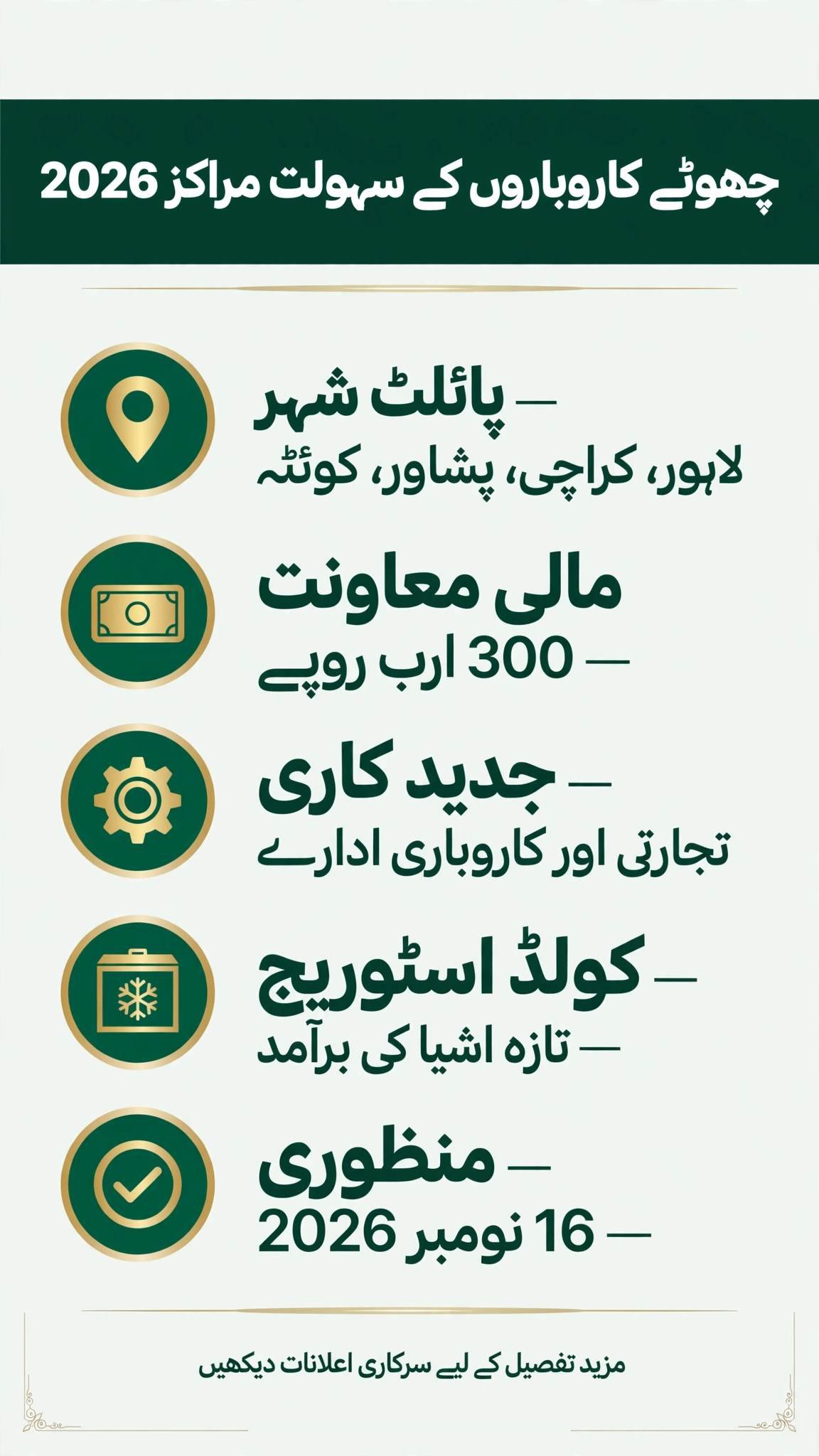
Small businesses across Pakistan have received a fresh boost from the federal government, with Prime Minister Shehbaz Sharif approving a new network of SME Facilitation Centres that will start as a pilot project in four major cities. The PM SME Facilitation Centres 2026 will open first in Lahore, Peshawar, Karachi and Quetta, and the plan is to expand them to every district of the country once the pilot has been assessed. For the thousands of small and medium-sized enterprises that struggle with financing, exports and official procedures, the centres promise a single place where help is available close to home.
The approval came at a meeting in Islamabad on Monday, 16 November 2026, where the prime minister met a delegation of SME exporters and reviewed the government’s initiatives to support small and medium-sized businesses. The meeting also confirmed that Rs300 billion has been allocated under the Export Finance Scheme for SMEs and new exporters, and that the Trade Development Authority of Pakistan and the Small and Medium Enterprises Development Authority are being modernised to help Pakistani businesses meet international export standards.
This article explains what the SME Facilitation Centres are, which cities are covered in the pilot phase, what financial support is available, and what small business owners should do now. Every figure in this article comes from the official announcement reported on 16 November 2026.
Latest Details
Detail
Information
Programme
PM SME Facilitation Centres 2026
Approved by
Prime Minister Shehbaz Sharif, 16 November 2026
Pilot cities
Lahore, Peshawar, Karachi and Quetta
Expansion plan
Gradual expansion to all districts after a performance assessment
Export Finance Scheme
Rs300 billion allocated for SMEs and new exporters
Institutions being modernised
Trade Development Authority of Pakistan and Small and Medium Enterprises Development Authority
The PM SME Facilitation Centres 2026 are district-level centres approved by the prime minister to promote entrepreneurship and make it easier for small and medium-sized businesses to export their products. Small and medium enterprises, known as SMEs, are the backbone of Pakistan’s economy: they employ millions of people, supply goods to larger industries, and produce a large share of the country’s exports. Yet many of them struggle with the same problems year after year, including access to finance, complicated procedures, and a lack of guidance on how to reach foreign buyers.
The new centres are designed to tackle those problems at the district level, where small businesses actually operate. Instead of asking a small exporter in Quetta or Peshawar to travel to Islamabad for guidance, the government plans to bring the support to their own city. The prime minister told the meeting that facilitating SME exports is among the government’s top priorities, and he directed the relevant authorities to take all necessary measures to raise public awareness about establishing businesses and developing entrepreneurial opportunities.
The centres are being set up as a pilot project first. The pilot will run in Lahore, Peshawar, Karachi and Quetta, and its performance will be assessed before the centres are expanded to all districts of the country. This step-by-step approach means the government can learn from the first four centres and fix any problems before rolling the model out nationwide.
Pilot Cities and Expansion Plan
The four pilot cities have been chosen to cover all four provinces of Pakistan, so that the model is tested in very different business environments before it is expanded. The pilot cities are:
Lahore: the commercial hub of Punjab, home to textiles, sports goods, surgical instruments and a large number of small manufacturing units.
Karachi: Pakistan’s largest city and main port, where exporters, traders and small manufacturers are concentrated.
Peshawar: the business centre of Khyber Pakhtunkhwa, with strong trade links to Afghanistan and Central Asia.
Quetta: the capital of Balochistan, where small businesses in mining, agriculture and handicrafts need export support.
Once the pilot has been assessed, the centres will gradually be expanded to all districts. No date for the opening of the first centres has been announced yet, and no centre addresses or registration process has been published. Small business owners should therefore watch for the next announcement from the Prime Minister’s Office or the Small and Medium Enterprises Development Authority, which will carry the opening dates and the services each centre will offer.
Rs300 Billion Export Finance Scheme for SMEs
Alongside the new centres, the prime minister confirmed a major financial commitment for small exporters. The government has allocated Rs300 billion under the Export Finance Scheme for SMEs and new exporters, and the prime minister made it clear that this amount is exclusively reserved for small and medium-sized enterprises. The Export-Import Bank has issued a circular in this regard, which means the financing window is formally in place for banks to follow.
This allocation is part of a wider package of SME financing that the government has built up over the past few weeks. At a meeting on 5 November 2026, the prime minister removed the condition that required SMEs to export at least 80 per cent of their products to qualify for long-term financing, opening the door for many more small businesses to access concessional loans. The same meeting was told that Rs350 billion has been earmarked this year under the Long-Term Financing Facility, and that around 17,000 SMEs in Pakistan are associated with exports.
The State Bank of Pakistan has also launched a dedicated portal to make it easier for SMEs to apply for loans. The portal went live on 1 November 2026, and more than 10,000 applications were received in its first days. The table below brings together the financing figures announced for the SME sector.
Support measure
Figure
Export Finance Scheme allocation
Rs300 billion, reserved exclusively for SMEs and new exporters
Long-Term Financing Facility
Rs350 billion earmarked this year
Export-oriented SMEs in Pakistan
Around 17,000
SBP SME loan portal
Launched 1 November 2026, more than 10,000 applications received
80 per cent export condition
Removed on 5 November 2026 for long-term financing
The combination of financing and facilitation is the key point of the new announcement. Money alone does not help a small exporter who does not know how to apply for it, and a facilitation centre alone does not help if there is no financing behind it. By approving the centres and confirming the Rs300 billion allocation in the same meeting, the government has linked the two sides of SME support together.
Modernisation of TDAP and SMEDA
The prime minister also announced that the government has approved the modernisation of two key institutions: the Trade Development Authority of Pakistan and the Small and Medium Enterprises Development Authority. The purpose of the modernisation is to promote exports and to align local industries with international export standards, so that Pakistani products can compete in foreign markets.
The Trade Development Authority of Pakistan is the body that promotes Pakistani exports abroad, organises trade exhibitions, and helps exporters find buyers in other countries. The Small and Medium Enterprises Development Authority is the body that supports small businesses with guidance, training and facilitation. Modernising both institutions means updating the way they work, so that they can serve exporters faster and to a higher standard.
A related reform was approved earlier in November, when the prime minister directed the modernisation of the Trade Development Authority of Pakistan as part of a wider overhaul of the trade promotion system. The 16 November approval confirms that both TDAP and SMEDA are part of the same modernisation drive, and it places the new facilitation centres inside that wider reform.
Cold Storage Action Plan for Perishable Exports
One practical problem raised at the meeting was the export of perishable goods, such as fresh fruit, vegetables, meat and dairy products, which spoil quickly without proper cold storage. The prime minister directed officials to present an action plan at the earliest for establishing a sustainable cold storage system to facilitate the export of perishable goods.
This matters because Pakistan produces large quantities of fruit and vegetables, including mangoes, citrus, onions and potatoes, but exporters lose a significant share of their produce when cold storage and refrigerated transport are not available. A proper cold storage system would let exporters send their goods to distant markets without spoilage, earn better prices, and reduce the losses that currently eat into their income. The action plan has been ordered, but its details, including the budget and the timeline, have not been published yet.
Committee to Review Exporters’ Proposals
The meeting was held with a delegation of SME exporters, who presented their own proposals for promoting the SME sector. The prime minister constituted a committee to review the actionable proposals submitted by the delegation and directed it to present a report on their implementation. This means the exporters’ suggestions are now being formally examined, rather than simply noted, and the committee’s report will decide which of them are put into practice.
The meeting was attended by senior members of the government, including federal ministers Rana Tanveer Hussain, Jam Kamal Khan, Dr Musadik Malik, Ahad Khan Cheema, Muhammad Aurangzeb, Attaullah Tarar and Shaza Fatima Khawaja, along with Minister of State for Finance Bilal Azhar Kayani, Special Assistant to the Prime Minister Haroon Akhtar, the Governor of the State Bank of Pakistan, the Chairman of the Securities and Exchange Commission of Pakistan, and senior officials of the relevant departments. The presence of the finance, commerce and industries ministers, together with the central bank governor, shows that the SME agenda is being handled across the whole economic team.
What Small Business Owners Should Do Now
The facilitation centres have been approved, but they are not open yet. Small business owners who want to benefit from the new support should take the following steps while the pilot is being set up:
Watch for opening dates: no launch date for the pilot centres has been announced yet, so follow announcements from the Prime Minister’s Office and the Small and Medium Enterprises Development Authority for the opening schedule.
Check the Export Finance Scheme: Rs300 billion has been allocated under the Export Finance Scheme for SMEs and new exporters, and the Export-Import Bank has issued a circular, so ask your bank about the scheme and its terms.
Use the SBP loan portal: the State Bank of Pakistan’s dedicated SME portal has been live since 1 November 2026, and more than 10,000 applications have already been received through it.
Prepare your business documents: keep your business registration, tax records and export documents ready, because facilitation centres and financing schemes both work faster when the paperwork is in order.
Follow the cold storage plan: exporters of perishable goods should watch for the cold storage action plan ordered by the prime minister, as it will affect how fresh produce is exported.
Do not pay agents: no registration fee, agent or middleman has been announced for the facilitation centres, so do not pay anyone who claims to secure a place at a centre.
Business owners should also note that the centres are a government facilitation service, not a loan scheme on their own. Their value lies in guidance, information and help with procedures, while the financing itself comes through the Export Finance Scheme, the Long-Term Financing Facility and the banking system.
How This Fits the Government’s SME Push
The approval of the facilitation centres is the latest step in a series of SME measures announced by the prime minister in November 2026. On 5 November, the government removed the 80 per cent export condition for long-term financing, so that SMEs no longer need to prove that most of their sales are exports before they can borrow at concessional rates. On 1 November, the State Bank of Pakistan launched its dedicated SME loan portal, which received more than 10,000 applications in its first days. On 6 November, the prime minister approved a comprehensive plan to modernise the Trade Development Authority of Pakistan.
The 16 November approval adds the missing piece to that package: a physical network of centres where small businesses can get help in person. The sequence shows a deliberate plan, starting with easier financing, then modernising the institutions, and now building the local centres that connect small businesses to both. For a small exporter, the practical result is that the support announced in Islamabad is now meant to reach the district where the business actually operates.
The pilot approach also matters. By starting in four cities and assessing performance before expanding, the government is testing whether the centres genuinely help small businesses before committing to a nationwide network. If the pilot works, the centres will reach every district; if it reveals problems, they can be fixed in four cities rather than in every district at once.
Conclusion
The approval of the PM SME Facilitation Centres 2026 is a practical step for Pakistan’s small and medium-sized businesses. The pilot project in Lahore, Peshawar, Karachi and Quetta will bring export guidance and business support to the district level, and the plan to expand to all districts after a performance assessment shows that the government intends this to be a nationwide network rather than a one-off announcement. Together with the Rs300 billion Export Finance Scheme, the modernisation of TDAP and SMEDA, and the cold storage action plan, the centres form a package that addresses the financing, guidance and logistics problems that small exporters face every day.
For small business owners, the message is clear: the support is being built, the financing is allocated, and the next step is to watch for the opening dates of the pilot centres. No registration process has been announced yet, so there is nothing to apply for today, but the businesses that prepare their documents and follow the official announcements will be ready when the centres open. The prime minister’s approval on 16 November 2026 has set the process in motion, and the coming weeks will show how quickly the pilot centres move from approval to operation.
FAQs
What are the PM SME Facilitation Centres 2026? They are district-level centres approved by Prime Minister Shehbaz Sharif on 16 November 2026 to promote entrepreneurship and facilitate exports for small and medium-sized enterprises.
Which cities are covered in the pilot phase? The pilot project will be launched in Lahore, Peshawar, Karachi and Quetta, and will gradually expand to all districts after a performance assessment.
How much has been allocated under the Export Finance Scheme? Rs300 billion has been allocated under the Export Finance Scheme for SMEs and new exporters, and the amount is exclusively reserved for small and medium-sized enterprises.
When will the facilitation centres open? No opening date has been announced yet. The pilot centres are being set up, and the dates will be announced by the Prime Minister’s Office or the Small and Medium Enterprises Development Authority.
Is there a registration process for the centres? No registration process, application form or fee has been announced. Small business owners should not pay any agent who claims to secure a place at a centre.
What is the Long-Term Financing Facility allocation for SMEs? Rs350 billion has been earmarked this year under the Long-Term Financing Facility, and the 80 per cent export condition for long-term financing was removed on 5 November 2026.
Which institutions are being modernised under this plan? The Trade Development Authority of Pakistan and the Small and Medium Enterprises Development Authority are being modernised to promote exports and align local industries with international export standards.
What is the cold storage action plan? The prime minister has directed officials to present an action plan at the earliest for a sustainable cold storage system to facilitate the export of perishable goods. Its budget and timeline have not been published yet.
Shahzad Sahil is the editor of plcpunjab.pk, covering Punjab government schemes including the Livestock Card, eligibility, registration and latest updates, with information verified from official sources for readers across Punjab.
Chief Minister Maryam Nawaz Sharif has given officials a 15-day deadline for a 100 per cent improvement in cleanliness across Punjab, after expressing dissatisfaction with solid waste management companies. The Suthra Punjab cleanliness deadline was set at a special meeting on Monday 2 November 2026 to review the Suthra Punjab programme, and reported on 3…
Young people who want to start or expand a business can get a loan from the federal government at low or zero markup. The PM Youth Business Loan Scheme 2026 — formally the Prime Minister’s Youth Business and Agriculture Loan Scheme — offers up to Rs 25 million in four tiers, starting with Rs 0.5…
Paying your Kisan Card bill on time was always wise, and this season it could also make you the owner of a brand new tractor. The Punjab Agriculture Department has attached a prize draw to the current repayment cycle: farmers who deposited their due amount by 30 October 2026 (extended from 26 October) were entered…
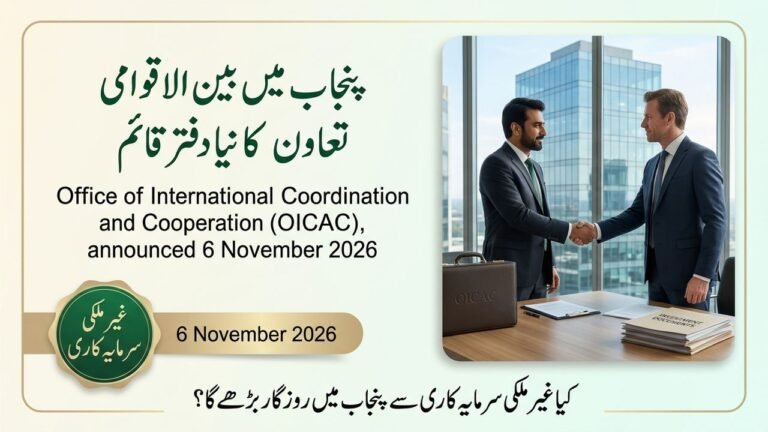
Punjab Chief Minister Maryam Nawaz Sharif has given her adviser Ali Dar the international cooperation portfolio and set up a new OICAC Punjab office to bring in foreign investment. The step was announced on 6 November 2026, and the government has already issued a notification about his added duties. The move creates a single office…
If you work in a factory in Lahore, Kasur or Sheikhupura, healthcare may now come to your workplace instead of you travelling to a hospital. Punjab’s Social Security Mobile Health Programme was launched on Monday, 12 October 2026, with a fleet of 65 mobile units serving registered industrial workers and their families. There is, however,…
The Apni Chhat Apna Ghar programme has crossed another milestone that few government housing schemes in Pakistan have ever reached. On 14 November 2026, Punjab Housing Minister Bilal Yasin told a visiting World Bank delegation that more than Rs 301 billion in interest-free loans has been disbursed to over 227,000 families, with more than Rs…