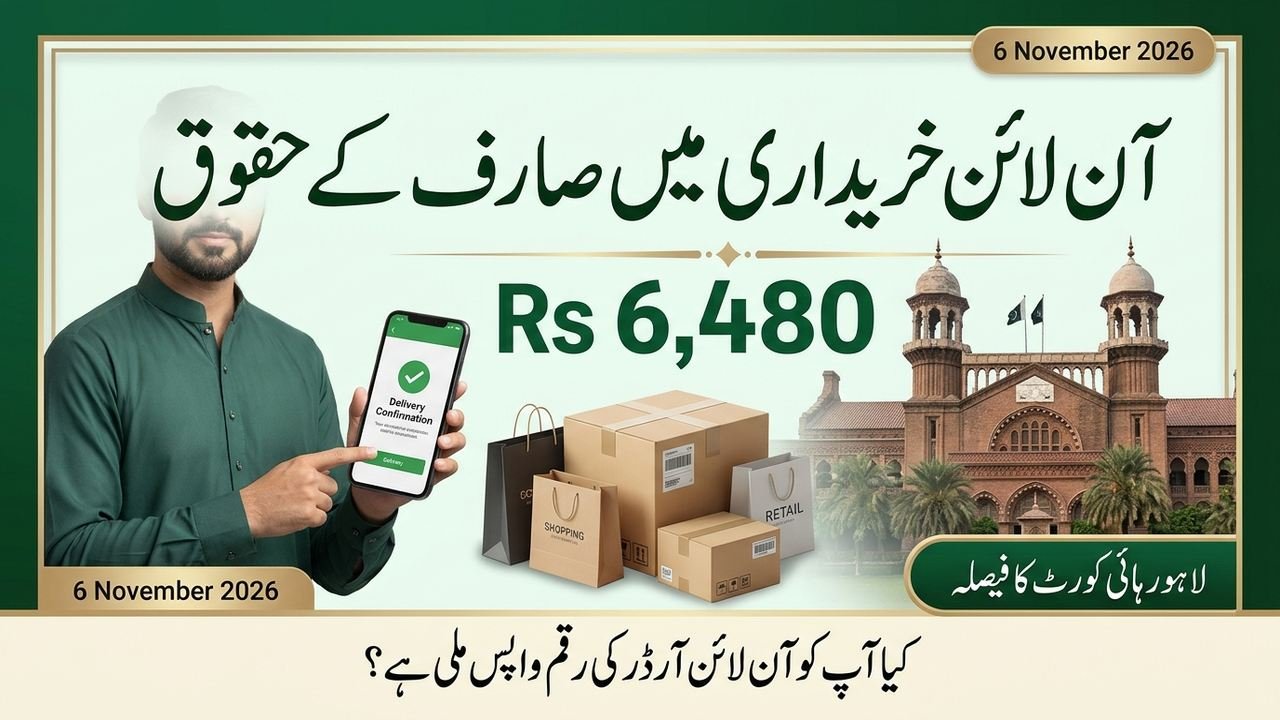
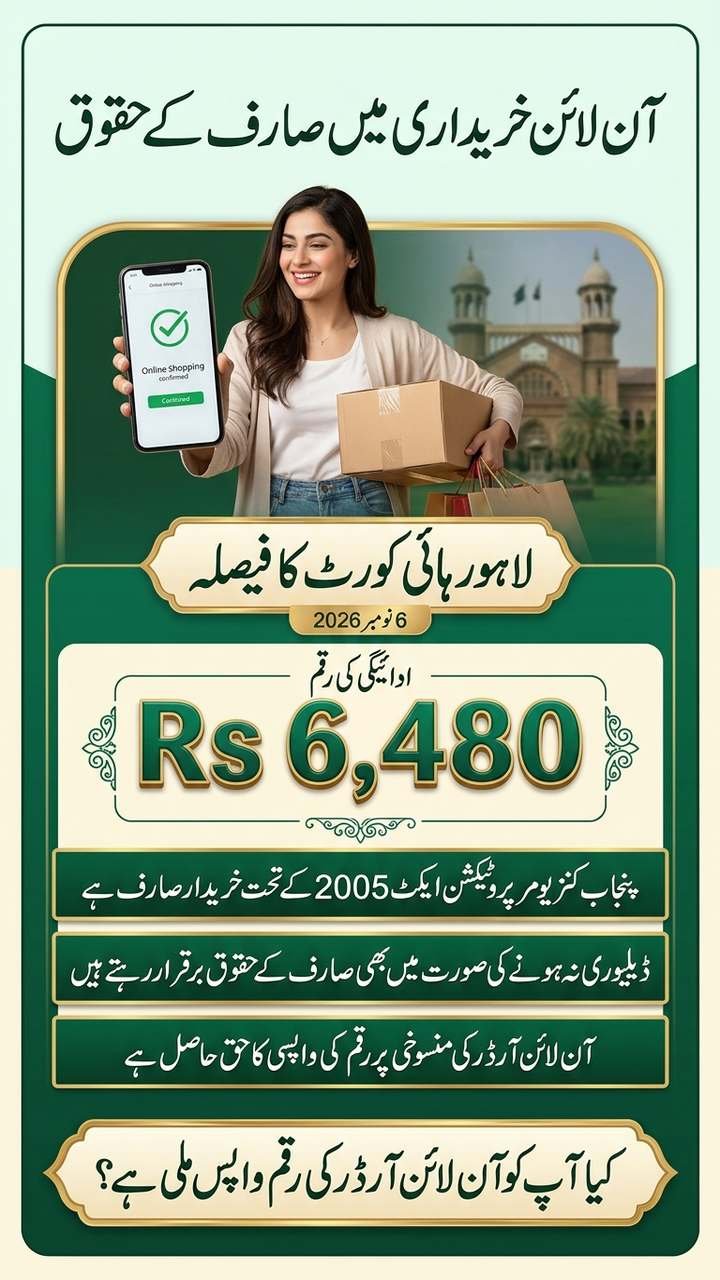
The Lahore High Court has ruled that a person who pays for goods remains a consumer under the Punjab Consumer Protection Act, 2005, even without delivery. The decision, dated 6 November 2026, backs online buyer consumer rights Punjab shoppers rely on when an order is cancelled after payment. Justice Malik Waqar Haider Awan held that non-delivery does not remove a buyer from the definition of a consumer.
Point
Detail
Court
Lahore High Court
Judge
Justice Malik Waqar Haider Awan
Law applied
Punjab Consumer Protection Act, 2005
Amount paid online
Rs 6,480 for two clothing articles
Damages claimed
Over Rs 2.1 million
Reported
6 November 2026
What Did the Lahore High Court Decide?
Court’s order: The High Court dismissed a writ petition and confirmed that the dispute must go before the consumer court.
Who is a consumer: Anyone who buys goods for a price paid, partly paid or promised is a consumer, and non-delivery does not change that.
Payment creates the link: The buyer paid in full online, and the seller admitted the booking and the refund, establishing a consumer-seller relationship.
Non-delivery changes nothing: Non-delivery or cancellation does not remove a buyer from the definition of a consumer.
The purchase: Dr Muhammad Eihtesham Qamar bought two clothing articles online for Rs 6,480 and paid by credit card.
The cancellation: The seller cancelled the order 17 days later, although its website had promised delivery within one to five working days.
Order cancelled late: The seller cancelled the order 17 days after purchase, citing the Covid-19 pandemic.
Delivery promise broken: The website had promised delivery within one to five working days.
Claim filed: The buyer sued for a refund and damages of over Rs 2.1 million, claiming mental agony.
Seller’s changing reply: The defendant first denied the transaction, then said the stock had run out and the amount was refunded.
What Is a Consumer Under the 2005 Act?
The definition: Under the Punjab Consumer Protection Act, 2005, a consumer is a person who buys goods for a price paid, partly paid or promised.
Wide reading: The High Court read this widely, so a buyer who has paid but received nothing is still a consumer.
Paid in full: A buyer who pays the full price online is a consumer from the moment of payment.
Partly paid: A buyer who has paid only part of the price is covered too.
Promised payment: Even a promised payment can bring a buyer within the definition of a consumer.
Booking amount only: The judge distinguished cases involving only a booking amount, which stand on a different footing.
Why the Civil Court Could Not Hear the Case
Buyer’s argument: Before the High Court, the buyer argued that the lower courts ignored the difference between a claim under the 2005 Act and a separate claim for general damages in the civil court under Section 9 of the Civil Procedure Code.
Court’s answer: Justice Awan rejected both points.
Label does not decide forum: The judge observed that merely calling the relief general damages cannot confer jurisdiction on the civil court.
No forum shopping: Accepting the argument would encourage forum shopping, letting a party pick its court.
Seller must not benefit: The judge said the argument could favour a seller who took full payment but failed to deliver.
What Online Buyers Should Do Now
Clear route: The ruling gives online buyers a clear route when an order is cancelled after payment.
First steps: Keep proof of the order and the payment, then raise the matter with the seller in writing before approaching the consumer court.
Keep proof: Save the order confirmation, payment receipt and any cancellation message from the seller.
Complain in writing: Send a written complaint to the seller asking for a refund.
Note the dates: Record the order date, promised delivery time and cancellation date.
Approach the consumer court: If the seller does not resolve it, file the claim before the consumer court in your district.
What Online Sellers Must Remember
Message to sellers: The ruling also sends a clear message to online sellers: taking full payment and then cancelling an order does not end the seller’s responsibility.
Honour the promise: Delivery times shown on a website are promises, and breaking them can support a claim.
Refund quickly: If stock runs out, the seller should refund the full amount without delay.
Consumer court risk: Sellers who ignore complaints can face a claim for refund and damages.
Contact
Detail
Competent forum
Consumer Court in your district, under the Punjab Consumer Protection Act, 2005
First step
Written complaint to the seller, asking for refund or delivery
Proof to keep
Order confirmation, payment receipt, delivery promise and cancellation message
Legal help
Consult a lawyer before filing a claim
Conclusion
The Lahore High Court has made the position clear for online shoppers in Punjab: paying for goods online makes you a consumer under the Punjab Consumer Protection Act, 2005, even without delivery. A buyer who paid Rs 6,480 and waited 17 days for a cancelled order must take the claim to the consumer court, not the civil court. Buyers should keep proof of every order and complain to the seller in writing. Sellers should honour delivery promises and refund quickly when they cannot deliver.
FAQs
Am I still a consumer if my online order is never delivered? Yes. The Lahore High Court has held that a buyer who pays online remains a consumer under the Punjab Consumer Protection Act, 2005, even without delivery.
Where should I file a claim for a cancelled online order? The claim belongs before the consumer court in your district, the competent forum under the 2005 Act, not the civil court.
What proof should I keep for an online purchase? Keep the order confirmation, payment receipt and any message cancelling the order.
Can I claim damages as well as a refund? Yes, a buyer can seek a refund and damages for the loss suffered, and the consumer court will decide the claim on its facts.
Shahzad Sahil is the editor of plcpunjab.pk, covering Punjab government schemes including the Livestock Card, eligibility, registration and latest updates, with information verified from official sources for readers across Punjab.
The One Million Youth Social Mobilizer Initiative is set to be launched by Prime Minister Shehbaz Sharif on 9 November 2026, and it aims to engage one million young Pakistanis as social mobilizers in their own communities. According to the latest official announcement by Federal Minister for Planning Ahsan Iqbal on 19 August 2026, the…
Rising petrol prices have made the Pakistan Fuel Subsidy 2026 one of the most searched relief topics of the year. The Prime Minister’s Fuel Relief Scheme offers Rs100 per litre off petrol for eligible motorcycle, rickshaw and small-car users, managed through a digital Fuel Pass System and the 9771 SMS service. This guide explains the…
The first Kisan Card lucky draw has been held, and tractors, motorcycles and mobile phones are among the prizes. Farmers who paid their Phase IV bills on time entered the draw, and the winners list is now available through official channels. This guide explains the draw, the prizes, the payment dates, and how farmers can…
Punjab Chief Minister Maryam Nawaz Sharif has given her adviser Ali Dar the international cooperation portfolio and set up a new OICAC Punjab office to bring in foreign investment. The step was announced on 6 November 2026, and the government has already issued a notification about his added duties. The move creates a single office…
Young people in Punjab who want a job with an international company can now get free, job-focused training without leaving the province. The PSDF Global Rozgar Programme 2026 is run by the Punjab Skills Development Fund under the Chief Minister’s Hunarmand Naujawan initiative, and it connects trained youth with international Business Process Outsourcing employers. Training…
With 40,000 new interest-free loans approved on 19 October 2026, one question is on the mind of every plot owner in Punjab: do I qualify for Apni Chhat Apna Ghar? The answer comes down to four things — Punjab residency, a small residential plot, a modest income, and a clean record. The criteria have not…